Religious Education and Worldviews
At Ridgeway Farm CE Academy, Religious Education is central to the way our Christian vision is lived out. Rooted in our vision to Believe, Learn and Grow, RE enables children to explore important questions about life, belief, meaning and purpose.
RE is an academically rigorous and inclusive subject. It gives pupils opportunities to develop knowledge and understanding of Christianity, other religious worldviews and non-religious worldviews. Children learn to reflect upon their own ideas while listening carefully and responding respectfully to the views of others.
We want every child to become curious, thoughtful and well-informed, with the knowledge and confidence needed to engage positively with the religious and worldview diversity of modern Britain and the wider world.
Believe
At Ridgeway Farm, we believe that high-quality Religious Education enables every child to flourish.
Our RE curriculum is rooted in our Christian vision that every child is known, valued and able to grow. It provides a safe and meaningful space in which pupils from a range of religious and non-religious backgrounds can explore questions about belief, identity, truth, morality and the meaning of life.
Through RE, we aim for pupils to:
develop secure knowledge of Christianity as a living, global and diverse faith;
explore a range of religious and non-religious worldviews;
understand how beliefs and worldviews may influence people’s lives;
ask thoughtful questions about meaning, belief and purpose;
examine different ideas, interpretations and sources of evidence;
express their own views and support them with reasons;
listen respectfully to the views and experiences of others;
develop religious and worldview literacy.
RE supports our commitment to dignity, belonging and hope. It helps children understand themselves and others while recognising that people within the same religious or non-religious worldview may hold different beliefs and live in different ways.
Learn
Our RE curriculum is carefully structured, progressive and ambitious. Learning is sequenced so that pupils revisit important concepts and build increasingly secure knowledge and understanding as they move through the school.
Our curriculum is informed by:
the Swindon Agreed Syllabus for Religious Education;
Understanding Christianity;
the Church of England Statement of Entitlement for Religious Education;
the needs and context of our school community.
Christianity is studied in depth throughout the school. Pupils also encounter a range of religious and non-religious worldviews, including Judaism, Islam, Hinduism and Humanism.
Understanding Worldviews
A worldview is a way of understanding life and the world. It may influence how a person thinks, what they value and how they choose to live.
Worldviews may be religious or non-religious. People may identify with an organised or shared worldview, such as Christianity, Islam, Judaism, Hinduism or Humanism. However, no worldview is experienced or expressed in only one way.
Each person’s lived worldview is shaped by a range of influences, which may include family, culture, community, location, personal experiences and individual interpretation. People who identify with the same worldview may therefore hold different beliefs, interpret sources differently and express their worldview in different ways.
Our religion and worldviews approach helps pupils explore diversity within and between religious and non-religious worldviews. Children learn to avoid treating a religion or worldview as a single, fixed set of beliefs and practices. Instead, they encounter the experiences, beliefs and practices of real people living in different places and contexts.
A People Centred Approach
RE at Ridgeway Farm is centred on people and their lived experiences. Pupils learn about what individuals and communities believe, how beliefs are interpreted and the different ways in which worldviews may be expressed.
We use careful language such as many, most and some so that pupils do not develop simplified or stereotypical ideas. For example, children might learn that:
Many Christians celebrate the Eucharist as a way of remembering Jesus’ sacrifice.
This approach helps pupils recognise diversity within and between worldviews.
Disciplinary Knowledge
Pupils learn how knowledge and understanding are developed within RE through three disciplinary areas:
We use Theo the Theologian, Sophie the Philosopher and Livvi the Social Scientist to help children recognise the different questions, methods and ways of thinking associated with each discipline.
Further information about our disciplinary characters and the questions they ask can be found in the separate Disciplinary Knowledge section below.
Teaching and Learning
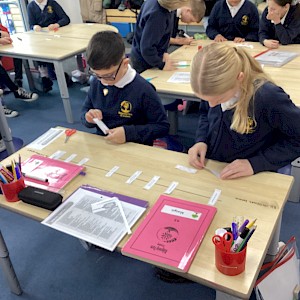
RE is taught regularly in every class and is valued as an important academic subject.
Lessons may include:
exploring sacred and significant texts;
investigating religious beliefs, concepts and practices;
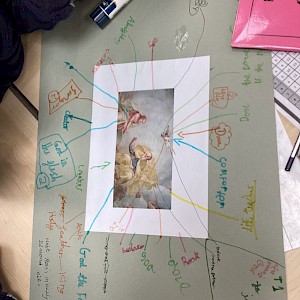
examining artefacts, images, data and other sources of evidence;
listening to people explain their lived worldviews;
discussion, dialogue and debate;
philosophical and ethical enquiry;
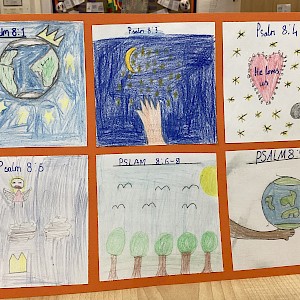
drama, art, music and storytelling;
reflection and opportunities to consider personal responses;
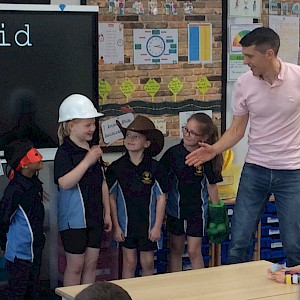
visits to places of worship and encounters with visitors.
Teachers create respectful classrooms in which children can ask questions, explore different viewpoints and disagree thoughtfully.
Teachers assess how well pupils remember and connect their substantive knowledge, use disciplinary methods and communicate their understanding. Assessment is used to identify what pupils know, address misconceptions and plan the next steps in learning.
Spiritual Development
RE makes an important contribution to pupils’ spiritual development. Children are given opportunities to reflect upon:
self – identity, values, feelings and personal responses;
others – relationships, empathy, respect and forgiveness;
the world – awe, wonder, responsibility and human experience;
God – faith, prayer, belief and questions about the divine.
These opportunities encourage pupils to think deeply, consider different perspectives and develop a greater understanding of themselves and others.
Enrichment
Learning in RE is enriched through:
visits to places of worship;
visitors representing different religious and non-religious worldviews;
church-led experiences;
Christmas, Easter and Pentecost activities;
prayer spaces and reflection days;
links with our local church and wider community.
These experiences help pupils connect classroom learning with the ways in which beliefs and worldviews are lived and expressed.
Grow
Through RE, pupils grow in knowledge, understanding, curiosity and confidence.
As pupils move through Ridgeway Farm, they become increasingly able to:
explain important beliefs, concepts and practices;
use religious and worldview vocabulary accurately;
interpret and respond to sources of authority;
recognise diversity within religious and non-religious worldviews;
compare ideas without treating people or communities as being identical;
use theology, philosophy and human and social sciences appropriately;
ask increasingly thoughtful questions;
give reasons and evidence for their conclusions;
make connections between beliefs, practices and lived experiences;
reflect upon their own ideas and recognise what has shaped them;
discuss differences respectfully and thoughtfully.
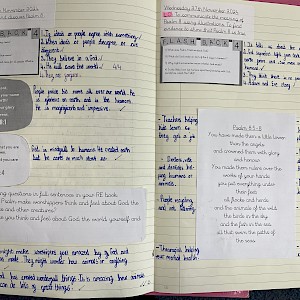
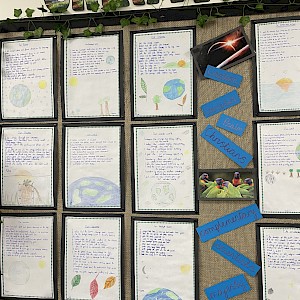
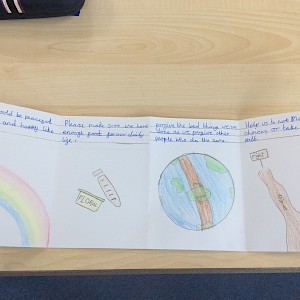
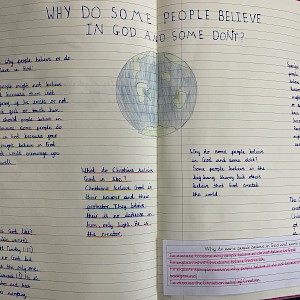
The impact of our curriculum can be seen in pupils’ conversations, written work, responses to enquiry questions and ability to apply previous learning.
Pupils leave Ridgeway Farm better prepared to understand themselves, engage respectfully with others and contribute positively to a religiously and culturally diverse society.
Inclusion
Religious Education at Ridgeway Farm is inclusive, invitational and respectful.
RE is for every pupil, including children from religious and non-religious backgrounds. Pupils are encouraged to participate, ask questions and reflect upon their own ideas, but they are never expected to adopt a particular belief or express a personal faith.
Teaching is adapted so that every child can access and engage with the curriculum. Teachers consider pupils’ individual needs, prior knowledge, language development and different starting points when selecting resources and planning learning.
Children are supported to express their views, listen carefully to others and disagree respectfully. Different beliefs and viewpoints are explored in a safe environment in which the dignity of every person is valued.
Church of England Entitlement and SIAMS
As a Church of England academy, our RE curriculum is designed to meet the expectations of the Church of England Statement of Entitlement for Religious Education 2026.
The Statement of Entitlement places Religious Education at the heart of a flourishing Church school. It expects RE to be an academically rigorous subject through which pupils develop substantial knowledge of Christianity, other religious worldviews and non-religious worldviews.
It also expects pupils to investigate religion and worldviews through theology, philosophy and human and social sciences.
The quality and effectiveness of Religious Education form part of the school’s SIAMS evaluation. School leaders, the RE subject leader and governors monitor RE with the same rigour as other academic subjects. This includes considering:
the quality and progression of the curriculum;
pupils’ knowledge and understanding;
the effectiveness of teaching and assessment;
the balance of theology, philosophy and human and social sciences;
the contribution RE makes to the school’s Christian vision;
the ways in which RE supports pupils to understand and engage respectfully with a diverse world.
This ensures that RE remains ambitious, inclusive, well led and firmly connected to our vision to Believe, Learn and Grow.
Right of Withdrawal
Parents and carers have the legal right to withdraw their child from all or part of Religious Education.
Parents or carers considering withdrawal are invited to meet with the Headteacher and RE subject leader. This provides an opportunity to discuss the school’s RE curriculum, the reasons for the request and the educational implications of withdrawal.
Parents and carers do not need to provide a reason for their decision. However, they should make clear whether the request relates to the whole subject or specific parts of the curriculum.
Requests for withdrawal should be made in writing to the Headteacher. Where a pupil is withdrawn, the school will discuss appropriate arrangements with the family. The purpose of withdrawal is to allow parents or carers to make their own arrangements for Religious Education rather than for the school to provide an alternative curriculum.
A child who has been withdrawn will not take part in RE unless the request is changed or removed. The right of withdrawal does not extend to other curriculum subjects in which religion or belief may arise incidentally.
Key Documents
RE Curriculum Overview
RE Subject on a Page
Religion and Worldviews Policy
Swindon Agreed Syllabus for Religious Education
Church of England Statement of Entitlement for Religious Education 2026
 Theo the Theologian
 Sophie the Philosopher